Air Quality and Asthma: How Pollution, Smoke, and Indoor Air Affect Your Lungs
Air quality is one of the most powerful -- and most overlooked -- factors in asthma control. Every breath you take carries thousands of microscopic particles, gases, and biological materials into your airways. For the more than 25 million Americans living with asthma, what is in that air can mean the difference between a symptom-free day and a trip to the emergency room.
Research consistently shows that both outdoor air pollution and poor indoor air quality are independent asthma triggers, capable of causing airway inflammation, increased mucus production, bronchospasm, and full asthma exacerbations. Understanding these risks -- and taking practical steps to reduce exposure -- is essential for long-term asthma management.
Outdoor Air Pollution and Asthma
Outdoor air pollution is a well-established risk factor for asthma development, symptom exacerbation, and reduced lung function. The pollutants most harmful to people with asthma include:
Particulate Matter (PM2.5 and PM10)
Fine particulate matter (PM2.5) consists of particles smaller than 2.5 micrometers -- small enough to bypass the nose and throat and penetrate deep into the small airways and alveoli. Sources include vehicle exhaust, industrial emissions, construction dust, and combustion byproducts. Studies demonstrate a clear dose-response relationship: as PM2.5 levels rise, so do asthma-related emergency department visits and hospitalizations.
Coarse particulate matter (PM10, particles under 10 micrometers) includes pollen, road dust, and mold spores. While these particles tend to deposit in the upper airways, they still trigger allergic responses and mechanical irritation that worsen asthma symptoms.
Ozone (O3)
Ground-level ozone forms when nitrogen oxides and volatile organic compounds react in sunlight. Ozone levels peak during hot, sunny afternoons -- making summer months particularly risky for people with asthma. Ozone is a potent airway irritant that causes inflammation, reduces lung function, and increases airway hyperresponsiveness. South Florida's combination of intense sunlight, heat, and traffic creates conditions that frequently elevate ozone levels.
Nitrogen Dioxide (NO2)
Produced primarily by vehicle emissions and gas-burning appliances, NO2 causes airway inflammation even at relatively low concentrations. People living near major highways or busy roads face higher asthma prevalence and more frequent symptoms. Children with asthma are particularly vulnerable to NO2 exposure.
Sulfur Dioxide (SO2)
Even brief exposure to sulfur dioxide can trigger immediate bronchoconstriction in people with asthma. Industrial facilities, power plants, and shipping ports are primary sources. People with asthma may experience symptoms at SO2 concentrations well below levels that affect the general population.
Understanding the Air Quality Index (AQI)
The EPA's Air Quality Index is the most practical tool for day-to-day air quality decisions. For people with asthma, the key thresholds are:
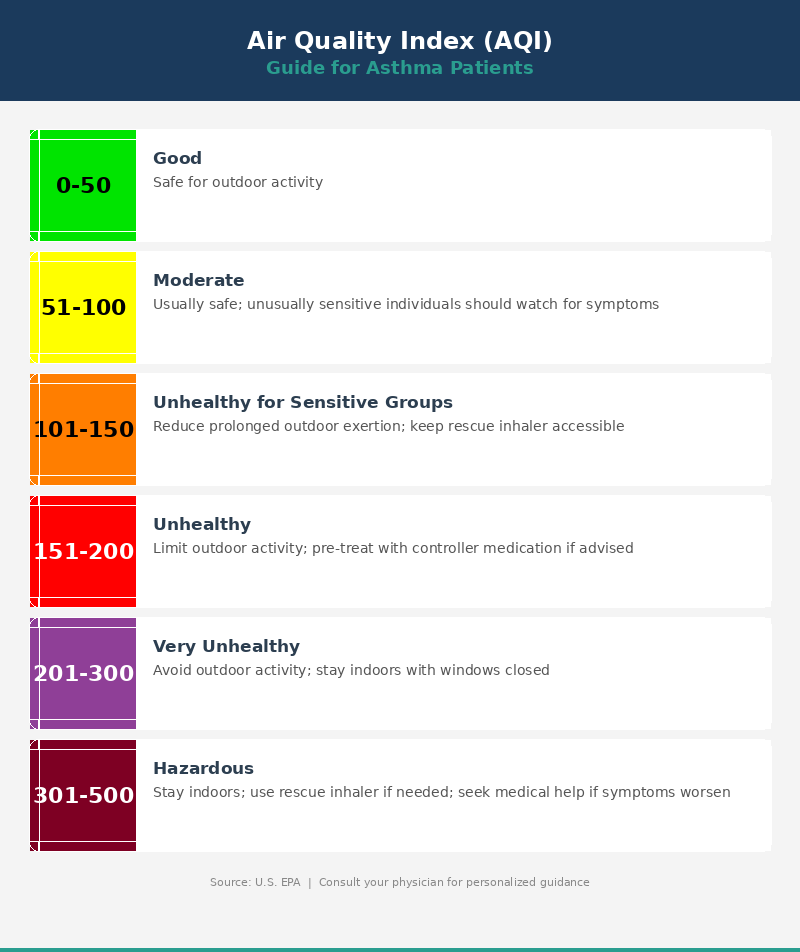
- AQI 0-50 (Good): Minimal risk. Normal outdoor activities appropriate for most asthma patients
- AQI 51-100 (Moderate): Generally acceptable, but individuals with severe asthma or high sensitivity may begin to notice symptoms during prolonged outdoor exertion
- AQI 101-150 (Unhealthy for Sensitive Groups): People with asthma should reduce prolonged outdoor exertion. Carry your rescue inhaler. Consider moving exercise indoors
- AQI 151-200 (Unhealthy): All asthma patients should limit outdoor exposure. Avoid outdoor exercise. Keep windows closed and use air filtration
- AQI 201+ (Very Unhealthy / Hazardous): Stay indoors. Run HEPA air purifiers. Follow your asthma action plan closely. Seek medical attention if symptoms worsen
You can check real-time AQI at AirNow.gov or through smartphone weather apps. Setting up AQI alerts for your ZIP code is a simple but effective strategy for asthma self-management.
Wildfire Smoke and Asthma
Wildfire smoke has become an increasingly significant threat to respiratory health across the United States -- including Florida. Wildfire smoke contains a complex mixture of PM2.5, carbon monoxide, volatile organic compounds, and toxic gases that can travel hundreds or even thousands of miles from the fire source.
The health effects for people with asthma are significant:
- Immediate airway inflammation: Fine particles trigger rapid inflammatory responses in already-sensitized airways
- Increased exacerbation risk: Studies show asthma-related emergency department visits increase 5-15% during major smoke events
- Prolonged effects: Airway inflammation from smoke exposure can persist for days to weeks after air quality improves
- Reduced medication effectiveness: Severe smoke exposure may temporarily reduce the effectiveness of controller medications
Protecting Yourself During Smoke Events
- Stay indoors with windows and doors closed. Use air conditioning on recirculate mode
- Run portable HEPA air purifiers, especially in the bedroom
- Avoid activities that generate additional indoor air pollution (cooking on gas stoves, burning candles, vacuuming without HEPA filtration)
- If you must go outdoors, wear an N95 respirator -- standard cloth or surgical masks do not filter fine particulate matter effectively
- Pre-treat with your controller medications as directed and keep your rescue inhaler accessible
- Contact your pulmonologist if symptoms worsen despite following your action plan
Indoor Air Quality: The Hidden Threat
Americans spend approximately 90% of their time indoors, yet indoor air can be 2-5 times more polluted than outdoor air. For people with asthma, indoor air quality is often more important than outdoor conditions because of prolonged exposure duration and concentrated allergen levels.
Common Indoor Asthma Triggers
- Dust mites: Microscopic organisms that thrive in bedding, upholstered furniture, and carpeting. They are the most common indoor allergen trigger for allergic asthma. South Florida's warm, humid climate creates ideal conditions for dust mite proliferation year-round
- Mold and mildew: Grows in damp areas -- bathrooms, kitchens, air conditioning systems, and behind walls. Mold spores are potent airway irritants and allergens. Florida's humidity and frequent rain make mold prevention an ongoing challenge
- Pet dander: Proteins in pet skin flakes, saliva, and urine become airborne and settle on surfaces throughout the home. Cat allergens are particularly persistent and can remain in a home for months after a cat is removed
- Volatile organic compounds (VOCs): Emitted by cleaning products, paints, air fresheners, new furniture, and building materials. These chemicals irritate airways and can trigger both immediate symptoms and chronic inflammation
- Cooking emissions: Gas stoves produce NO2, and all cooking generates particulate matter. Studies link gas stove use to increased childhood asthma risk
- Tobacco and vaping aerosols: Secondhand smoke contains over 7,000 chemicals and is one of the most potent indoor asthma triggers. E-cigarette aerosol also contains harmful chemicals and ultrafine particles
Humidity, Mold, and South Florida's Unique Challenges
Living in Plantation, Broward County, and across South Florida presents specific air quality challenges for asthma patients. The subtropical climate means high humidity, abundant mold growth, and year-round allergen exposure that residents in drier climates do not face.
Humidity Management
Indoor humidity above 50% creates an environment where dust mites flourish and mold growth accelerates. Below 30%, air becomes too dry and can irritate airways. The optimal range for asthma patients is 30-50% relative humidity. Practical strategies include:
- Use a dehumidifier in humid rooms, especially during the wet season (June through October)
- Run air conditioning consistently -- A/C both cools and dehumidifies. Set the fan to "auto" rather than "on" to allow moisture removal
- Use exhaust fans when cooking and showering to remove moisture at the source
- Monitor with a hygrometer -- inexpensive digital humidity monitors help you track conditions in real time
- Fix water leaks promptly -- even small leaks behind walls or under sinks create hidden mold colonies
Mold Prevention and Remediation
Mold exposure is a significant asthma trigger and, for some patients, a cause of severe, difficult-to-control asthma. In South Florida's climate, mold prevention requires active effort:
- Clean visible mold with appropriate products (avoid bleach fumes -- use commercial mold cleaners or hydrogen peroxide solutions)
- Regularly clean and service air conditioning systems, including duct cleaning and filter replacement
- Address water intrusion immediately after storms or flooding
- Consider professional mold assessment if you have unexplained worsening of asthma symptoms at home
- Use mold-resistant paint in bathrooms and high-moisture areas
Evidence-Based Indoor Air Quality Solutions
HEPA Air Purifiers
High-efficiency particulate air (HEPA) filters capture 99.97% of particles 0.3 micrometers and larger, including dust, pollen, mold spores, pet dander, and fine particulate matter. Research supports their use for asthma management:
- Bedroom HEPA purifiers have been shown to reduce nighttime asthma symptoms and improve sleep quality
- Most effective when combined with allergen-reduction strategies (encasements, cleaning, humidity control)
- Choose a unit rated for your room size (look for CADR -- Clean Air Delivery Rate)
- Replace filters on the manufacturer's recommended schedule
HVAC Optimization
- Use MERV 11-13 filters in your central HVAC system (higher than standard but compatible with most residential systems)
- Change HVAC filters every 60-90 days, or monthly during high-pollen or smoke seasons
- Have ductwork cleaned every 3-5 years, or sooner if visible mold or excessive dust is present
- Ensure your system is properly sized -- an oversized A/C cools quickly but does not run long enough to dehumidify effectively
Reducing Chemical Irritants
- Choose fragrance-free cleaning products and detergents
- Avoid air fresheners, scented candles, and incense -- all release VOCs and particulate matter
- Ventilate well when painting, using adhesives, or installing new flooring or furniture
- Switch from gas to electric cooking appliances if possible, or use range hoods that vent outdoors
Climate Change and Asthma
Climate change is making air quality challenges worse for asthma patients. Rising temperatures increase ground-level ozone formation. Longer and more intense wildfire seasons expand smoke exposure. Warmer winters extend pollen seasons, and increased CO2 levels stimulate plants to produce more pollen. More frequent extreme weather events -- hurricanes, flooding -- create conditions for widespread mold growth.
For patients in South Florida, these trends mean that proactive air quality management is increasingly important for long-term asthma control. Working with a pulmonary specialist who understands these environmental factors is essential.
When to See a Specialist About Air Quality and Asthma
Consider evaluation from Dr. Frank Hull if you are experiencing:
- Asthma symptoms that consistently worsen at home, at work, or in specific environments
- New or increasing symptoms during wildfire smoke events or high-pollution days
- Suspected mold exposure with worsening respiratory symptoms
- Workplace-related breathing problems from chemical fumes, dust, or poor ventilation
- Asthma that remains poorly controlled despite consistent medication use
- Seasonal patterns suggesting environmental triggers
- Need for comprehensive allergy and pulmonary function testing to identify specific environmental triggers
With over 20 years of experience in pulmonary medicine, Dr. Frank Hull uses advanced diagnostic testing -- including spirometry, bronchial provocation testing, exhaled nitric oxide measurement, and allergy panels -- to identify the specific environmental factors driving your asthma and develop a targeted management plan.
Frequently Asked Questions
What AQI level is dangerous for asthma?
People with asthma should take precautions when the AQI exceeds 100 (Unhealthy for Sensitive Groups). At AQI above 150, all asthma patients should limit outdoor exposure. Even moderate AQI levels (51-100) can trigger symptoms in people with severe asthma.
Can wildfire smoke trigger an asthma attack?
Yes. Wildfire smoke contains fine particulate matter (PM2.5) and volatile organic compounds that penetrate deep into the lungs, causing airway inflammation, bronchospasm, and exacerbations. Emergency department visits for asthma increase significantly during wildfire smoke events.
How does humidity affect asthma in South Florida?
High humidity promotes mold growth and dust mite proliferation -- both major asthma triggers. South Florida's tropical climate requires proactive indoor humidity management, ideally keeping levels between 30-50%.
Do HEPA air purifiers help with asthma?
Yes. HEPA purifiers remove 99.97% of airborne particles 0.3 microns and larger. Studies show portable HEPA purifiers in the bedroom can reduce asthma symptoms and improve lung function, particularly in children and during high-pollution events.
Breathe Easier with Expert Guidance
You cannot control the air outside, but you can take meaningful steps to protect your airways -- and you do not have to figure it out alone. At the Advanced Asthma Clinic, Dr. Frank Hull works with patients across Plantation, Broward County, and South Florida to identify environmental triggers, optimize treatment plans, and build resilient asthma management strategies that account for the realities of Florida's climate.
For patients with severe or environmentally-driven asthma that is difficult to control, access to advanced biologic therapies and clinical trial programs may provide additional options. Financial assistance may be available through the Better Breathing Grant program.
Every breath matters. Call 954-522-7226 to schedule a consultation, or contact us online.
This content is for educational purposes and does not replace professional medical advice. Always consult your physician before making changes to your asthma treatment plan.